From Infrastructure to Plot: Modernizing Irrigation Practices in the EU
This article was submitted for publication as part of the call for papers for young specialists and represents an independent opinion on the market.
Europe is spending billions on modernizing irrigation, and running dry anyway.
Drip technology is spreading fast across Southern Europe, yet water stress is worsening. Why? Because funding flows without meters, basin-level limits, or enforcement. Efficiency gains at the farm are erased by crop expansion at the basin, following the mechanisms that offer three specific CAP reforms to fix them.
Introduction
The European Irrigation Landscape: Scale, Stress, and Structural Disparity
|
Indicator
|
EU-27
|
Southern EU
(MED9)
|
Spain
|
|
Share of farmland
irrigated
|
~6% (2016)
|
Highest share
|
~23% (3.8M ha,
2021)
|
|
Share of total water
abstraction
|
24%
|
60% of the EU-27
total
|
~70% of Spain’s total
|
|
Drip irrigation
adoption
|
Growing
|
Dominant technology
|
53% of the irrigated area
(2021)
|
|
Water scarcity
exposure (2023)
|
28% of the EU land
Area
|
Permanent stress
(30% pop.)
|
70%+ seasonal stress
|
|
Relative irrigation supply
(Guadalquivir)
|
—
|
0.56 in 2021
|
Fell from 0.70 (2000)
|
The Governance Gap: When Conditionality Does Not Reach the Plot
The Rebound Effect: How Technology Upgrades Can Increase Water Consumption
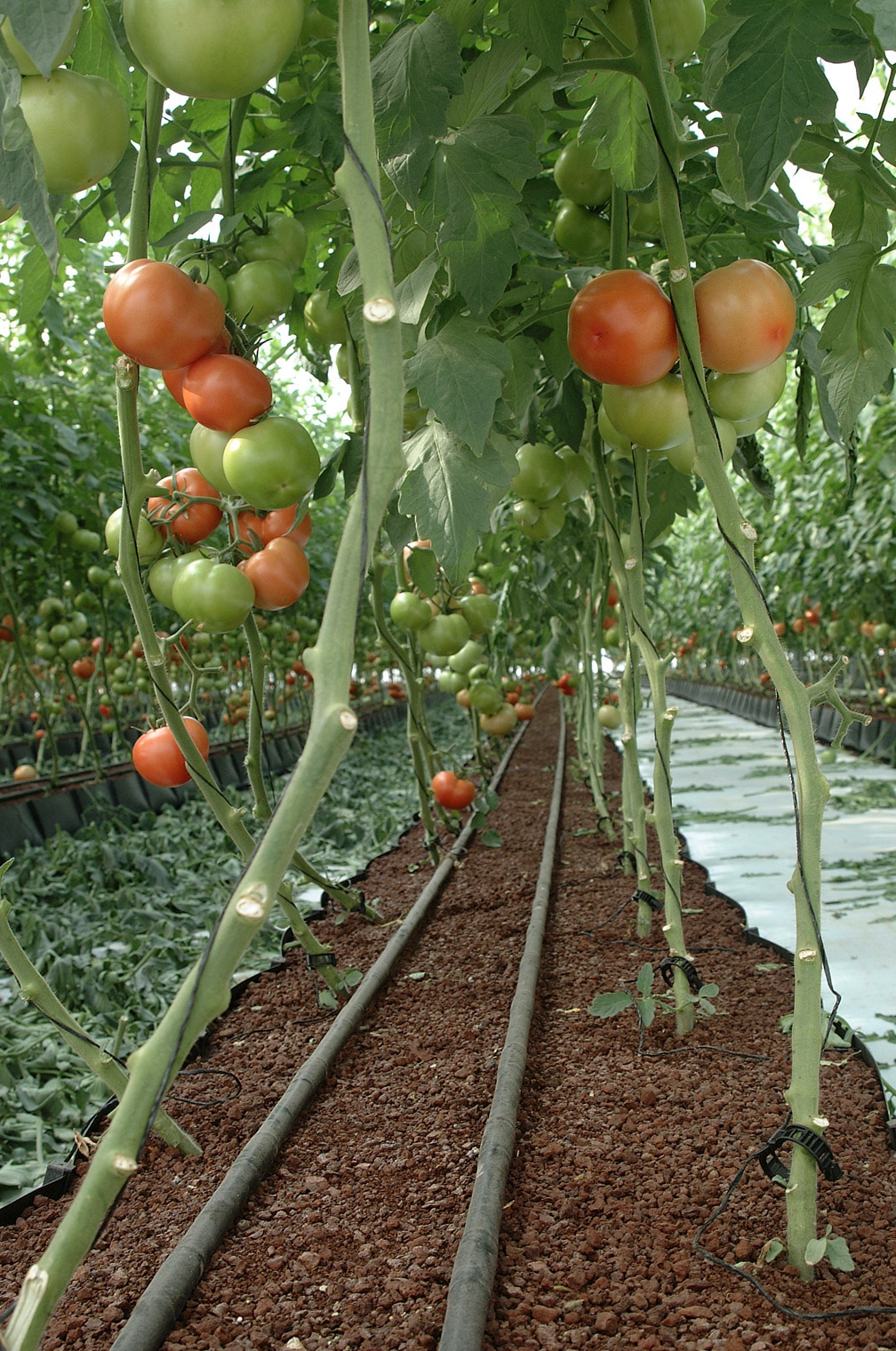
Photo credit : Rivulis “Drip irrigation technology is spreading rapidly in southern Europe, but water stress is worsening“
Policy Implications for CAP Post-2027
-
Mandatory Water Metering as a Condition for CAP Irrigation Funding
- Basin-Level Water Budgets as the Binding Conditionality Unit
- Eco-Scheme Payments Conditional on Verified Consumptive Use Reduction
Conclusion
EIA Statement
The European Irrigation Association (EIA) welcomes contributions that encourage discussion on the future of water management and irrigation in Europe. The challenges posed by climate change, increasing water scarcity and ageing infrastructure require continued investment and policy attention.
At the same time, it is important to recognise that considerable progress has already been made across Europe. In many Member States, irrigation water is already metered, collective irrigation schemes are subject to strict monitoring, and river basin authorities increasingly rely on digital tools to manage water resources. While implementation remains uneven across the EU, these advances demonstrate that the transition towards more sustainable water management is well underway.
From the EIA’s perspective, the priority is to accelerate the deployment of precision irrigation. Modern irrigation is no longer simply about delivering water – it integrates sensors, automation, satellite data, weather information and decision-support systems to apply the right amount of water, at the right time and in the right place. These technologies improve water productivity, reduce energy use and help farmers adapt to increasingly variable climatic conditions.
The EIA therefore believes that future European investment should build on the progress already achieved while supporting the wider adoption of precision irrigation technologies, modern infrastructure and digital water management. Recognising both the remaining challenges and the successes already delivered will be essential to achieving the EU’s objectives for water resilience, food security and sustainable agriculture.
References:
-
Climate Scorecard (2023). EU Faces Dwindling Water Resources Due to Climate Change and Insufficient National Action to Support EU Policies. https://www.climatescorecard.org/2023/09/eu-faces-dwindling-water-resources-due-to-climate-change-and-insufficient-national-action-to-support-eu-policies/
-
EcologicInstitute(2024).Europe’sStateofWater2024.https://www.ecologic.eu/19853EuropeanCommission(2021).Water–AgricultureandRuralDevelopment.DGAGRI. https://agriculture.ec.europa.eu/sustainability/environmental-sustainability/natural-resources/water_en
-
EuropeanCourtofAuditors[ECA](2021).SpecialReport20/2021:SustainableWaterUsein EUAgriculture. Publications Office of the EU. https://op.europa.eu/webpub/eca/special-reports/cap-water-20-2021/en/
-
EuropeanEnvironmentAgency[EEA](2025).WaterScarcityConditionsinEurope(8thEAP Headline Indicator). https://www.eea.europa.eu/en/analysis/indicators/use-of-freshwater-resources-in-europe-1
-
European EnvironmentAgency [EEA] (2025). Water Savings for a Water-Resilient Europe. https://www.eea.europa.eu/en/analysis/publications/water-savings-for-a-water-resilient-europeEuropean Environmental Bureau [EEB] (2017). AgricultureandSustainableWaterManagement in the EU: EEB & PAN Europe Reaction. https://eeb.org/agriculture-and-sustainable-water-management-in-the-eu-eeb-pan-europe-reaction/
-
FAO(2021).TheStateoftheWorld’sLandandWaterResourcesforFoodandAgriculture– Systems at Breaking Point. https://www.fao.org/land-water/solaw2021
-
Grafton, R. Q. et al. (2018).Theparadoxofirrigationefficiency.Science,361(6404),748–750. https://doi.org/10.1126/science.aat9314
-
ICPDR (2014). Water Concerns Not Sufficiently Met by the EU CommonAgricultural Policy. International Commission for the Protection of the Danube River. https://www.icpdr.org/publications/water-concerns-not-sufficiently-met-eu-common-agricultural-policy
-
INE(2021).AgriculturalCensus2020.InstitutoNacionaldeEstadística,Spain. https://www.ine.es/dyngs/INEbase/listaoperaciones.htm
-
IrrigationEurope(2022).IrrigationinEurope:MarketReport2022.
-
JointResearchCentre(2024).CombinedDroughtIndicator2022.Citedin:CenterforEuropean Studies, University of Florida. https://ces.ufl.edu/eu-need-to-know/2024/eu-and-drought-how-they-get-on/
-
Molden,D.(Ed.)(2007).WaterforFood,WaterforLife:AComprehensiveAssessmentofWater Management in Agriculture. Earthscan/IWMI. https://www.iwmi.cgiar.org/Publications/CA/CA_Summary.pdf
-
Mordor Intelligence (2025). Europe Agricultural Irrigation Machinery Market.
-
OECD(2020).SustainableAgricultureandWaterManagementinEurope. https://www.oecd.org/agriculture/topics/water-and-agriculture/
-
Pe’er,G.etal.(2022).TheEU’sCommonAgriculturalPolicypost-2027:Acriticalanalysisfrom a nature conservation and climate perspective. Frontiers in Sustainable Food Systems.
-
Perry, C., Steduto, P.,Allen, R., & Burt, C. (2009). Increasing productivity in irrigated agriculture:Agronomicconstraintsandhydrologicalrealities.AgriculturalWaterManagement, 96(11), 1517–1524. https://doi.org/10.1016/j.agwat.2009.05.005
-
RobertSchumanFoundation(2022).TheCommonAgriculturalPolicy2023–2027:Changeand Continuity. European Issue No. 607. https://www.robert-schuman.eu/en/european-issues/0607-the-common-agricultural-policy-2023-2027-change-and-continuity
-
ScienceDirect(2024).TowardsaNewEfficiencyParadigmforDripIrrigation?Changesin WaterAllocation and Management in Irrigation and Wetland Systems. https://doi.org/10.1016/j.agsy.2024.103946
-
Stupazzini, M. (2024). EU and Drought: How They Get On. Center for European Studies, UniversityofFlorida.https://ces.ufl.edu/eu-need-to-know/2024/eu-and-drought-how-they-get-on/
-
Tocados-Franco,J.M.(2023).GuadalquivirRiverBasin:DroughtVulnerabilityandIrrigation Supply. Cited in: Center for European Studies (2024).
-
VynzResearch(2023).EuropeDripIrrigationMarketSize,Share,Growth,andDemandby 2030. https://www.vynzresearch.com/food-beverages/europe-drip-irrigation-market